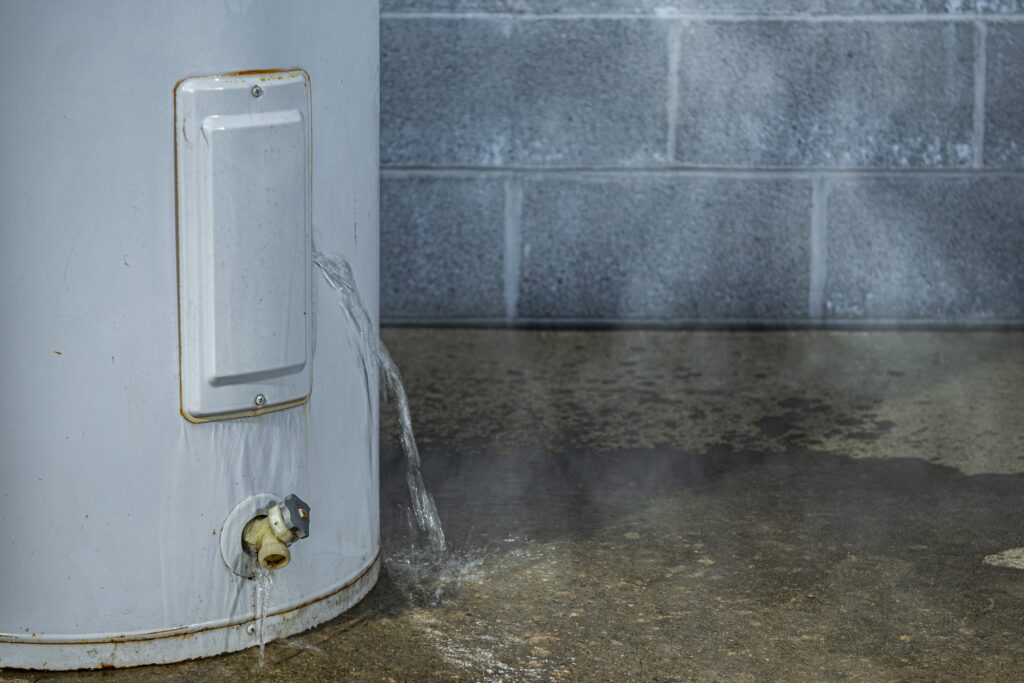
You walk into the basement and notice something isn’t right. There’s water on the floor near your water heater. Maybe it’s a small puddle. Maybe it’s spreading. Your first thought might be that it’s nothing serious. But when it comes to water heaters, even a small leak can turn into a major problem fast.
If you see water around your tank in Elkhart, IN, it’s important to take it seriously. What looks minor today can lead to flooding, property damage, and a full system failure if ignored.
Why You Should Never Ignore a Leaking Water Heater
A leaking water heater can damage more than you think. Water can soak into flooring, walls, and anything stored nearby. If your basement is finished, repairs can become expensive quickly. Moisture can also lead to mold growth.
In some cases, the tank may be rusting from the inside. When corrosion weakens the tank, it can break open and release a large amount of water all at once.
Waiting too long can lead to:
- Basement flooding
- Damage to floors and walls
- Mold and mildew
- Electrical safety risks
- Full water heater failure
Fixing a leak early is usually simpler and less costly than dealing with major damage later.
Common Causes of Water Heater Leaks
Leaks can come from different parts of the water heater. Where the water appears often points to the problem.
- Leaking from the top: Often caused by loose pipe connections or a failing temperature and pressure (T&P) relief valve.
- Leaking from the bottom: Water around the base may mean the tank is rusting or wearing out inside. This usually means replacement is needed.
- Leaking drain valve: The drain valve near the bottom can loosen or crack over time and begin to drip.
- T&P valve leaking: Water from this valve may mean too much pressure or heat inside the tank. This is a safety concern.
- Sediment buildup: Minerals collect at the bottom of the tank over time. This can cause overheating and damage the tank lining, leading to leaks.
Sometimes water around a heater is just condensation. In humid conditions, the tank may “sweat,” creating moisture on the outside. Condensation is usually light and even across the surface. If you see dripping, pooling water, or rust, it is likely a real leak.
What To Do When Your Water Heater Leaks
If you see water near your heater, stay calm but act quickly.
First, check if it could be condensation. Dry the tank and watch it. If water returns or continues dripping, you likely have a leak.
If the heater is leaking, first turn off the water supply using the shutoff valve above the tank. Then turn off the unit’s power. Switch off the breaker for electric heaters or turn the gas control to “off.” Keep clear of standing water near electrical parts.
These steps can help limit damage until a professional arrives.
Call for service right away if:
- The tank itself is leaking
- Water is flowing steadily
- The T&P valve keeps releasing water
- The unit is older and showing rust
Some leaks can be repaired by replacing a valve or fitting. If the tank is damaged, replacement is usually the safest option.
Schedule your Appointment Today!
(574) 295-6844Call Church Plumbing for Water Heater Repair
If you find a leak, you need help quickly. Church Plumbing & Heating has served Elkhart and the Michiana area since 1984. We are a local company with local people in our local office, and we understand how fast water damage can grow.
We offer 24/7 emergency service for leaking water heaters. Our friendly technicians provide upfront pricing, free estimates on replacements, and a minimum one-year warranty on every repair. Whether you need a repair or a new system, we will explain your options clearly.
If you see water around your water heater, contact Church Plumbing & Heating to schedule fast repair in Elkhart, IN.